You must have noticed how some ring stacks just look perfectly put together. Nothing looks out of place, and even the simplest rings seem to work better when worn together.
There’s a certain art to that balance, but it’s not complicated once you know what to look for. A few small details make all the difference. Start with understanding what ring stacking actually is, and the rest becomes much easier to build from there.
Simple steps for ring stacking
Start with a base ring, such as an engagement ring or statement band
Mix thin and thick bands to create contrast
Combine different textures like plain or pavé
Mix metals such as yellow gold, white gold, and rose gold
Spread rings across multiple fingers for balance
Keep comfort in mind for everyday wear
What is ring stacking?
Ring stacking is the practice of wearing multiple rings on one or both hands, arranged to create a cohesive look. These rings can vary in design, metal, or stone, but they work together as a single composition.
It differs from wearing a statement ring, where one piece draws all the focus. In stacking, attention is distributed across several elements. Each ring contributes to the overall structure.
This approach also creates more versatility. Rings can be rearranged, removed, or added on any given day. That flexibility is what defines ring stacking as a styling method.
Start with a base ring
Every stack should have a starting point. A base ring anchors the arrangement and sets the direction for everything that follows.
This base ring acts as the focal point or anchor of the stack, guiding how other rings are added.
This could be a solitaire, a signet ring, or a simple band. The key is choosing something that stands on its own and holds visual weight. Once that is in place, other rings can be added around it in a way that supports it.
For those building a wedding ring stack, the engagement ring or wedding band usually takes this role. From there, additional rings can be introduced gradually. Starting with a clear base simplifies decisions and gives the stack a sense of structure.
A stack can look completely different depending on how the rings are placed together. The number of rings does not define how it turns out. What stands out more is how they sit next to each other.
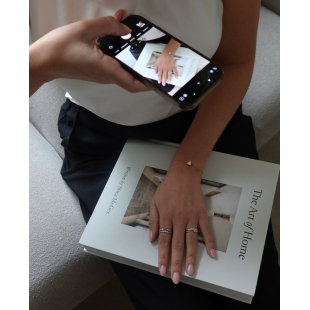
Combining dainty bands with slightly chunkier rings and varying heights creates more depth and prevents the stack from looking flat.
A couple of thin bands next to a slightly thicker one can bring more shape to the stack than several rings of the same width. When everything looks too similar, the stack can lose definition. A bit of variation gives it structure and makes each ring stand out in the right way.
Spacing also plays a role. Rings should sit comfortably next to each other, with enough room for each piece to be visible. When rings are pressed too closely together, details get lost, and the overall look becomes crowded.
Proportion also affects comfort. Rings that are too tightly stacked can restrict movement. A well-balanced stack maintains both visual clarity and ease of wear.
Mixing metals the right way
Combining different metals adds depth to a stack when done with care. Yellow gold, white gold, and rose gold can work together, but the mix needs direction.
One approach is to choose a dominant metal, then introduce another as a secondary element. This creates contrast while keeping the stack cohesive. A mixed metal ring stack works best when there is a clear visual anchor.
Consistency in finish also helps. If most rings are polished, introducing a single matte ring can add interest. However, too many variations can break the flow.
Mixing metals is less about rules and more about balance. When the combination looks intentional, it integrates smoothly into the overall stack.
Playing with textures and details
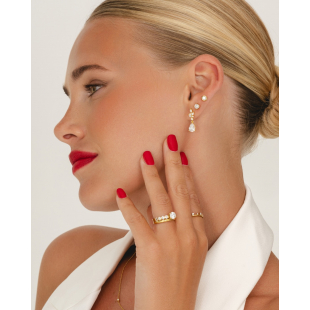
Texture is usually what gives a stack its character. A plain band next to a pavé ring changes the look straight away, even if both pieces are simple on their own.
Kala, our half eternity diamond ring with a row of diamonds, adds just enough detail to lift a stack, especially when paired with a smooth band. It creates contrast without making the combination look busy.
The same idea applies across finishes. A polished ring next to a slightly textured one, or a clean band placed between more detailed pieces, keeps the stack from looking one-dimensional. When every ring has the same level of detail, everything starts to blend together.
Spacing and placement help here as well. Letting one detailed ring stand on its own or pairing it with something simpler keeps the overall look clear and well-balanced.
Gemstones introduce focal points into a stack. A single stone ring can anchor the arrangement, while surrounding bands support it.
Using multiple gemstone rings requires control. If several stones are similar in size and placement, the stack can lose structure. Varying the scale or spacing keeps each element distinct.
Stackable diamond rings pair well with plain bands. The contrast highlights the stones while maintaining balance. This approach keeps the stack structured.
For those exploring stackable birthstone rings, color adds another layer to consider. Maintaining a measured arrangement ensures that each stone stands out without overwhelming the composition.
How to stack across different fingers
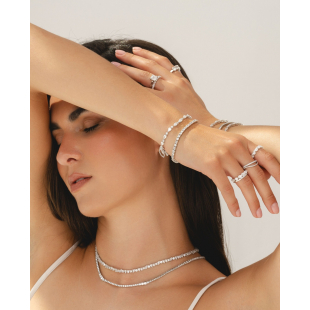
Ring stacking does not need to stay on one finger. Distributing rings across both hands creates a more balanced look.
One approach is to keep one hand lighter, with fewer rings, and build slightly more on the other. This avoids symmetry that can look too deliberate. A natural distribution creates movement across the hands.
Different fingers can also carry different roles. A stronger stack on one finger can act as the focal point, while simpler bands on others support the overall look.
Stackable rings for women work well across multiple fingers because they can be rearranged easily. This flexibility keeps the styling adaptable.
A stack should work through the day, not just in a still moment. Comfort plays a central role in how wearable the arrangement is.
Rings need enough space to allow natural finger movement. If they press too closely together, they can restrict flexibility. Choosing the right sizes for each finger helps maintain comfort.
Weight also affects wearability. A stack built entirely from heavier rings can become tiring over time. Mixing lighter bands with a few structured pieces creates a better balance.
Practicality also includes how rings interact with daily activities. A well-planned stack stays secure and does not interfere with routine tasks.
When to keep it minimal
There are times when fewer rings create a stronger result. A single stack on one finger or two rings placed thoughtfully can have more impact than a full arrangement.
This approach works well in settings where simplicity suits the overall look. It also gives individual rings more visibility, allowing their design to stand out.
Minimal stacks also pair well with other jewellery. They leave room for bracelets or watches to take focus without competing elements.
Stackable wedding bands or stackable engagement rings can be worn alone or with a single additional band to create a more restrained look when needed.
Build your stack over time
Ring stacking develops gradually. It is not something that needs to be completed at once. Each ring added over time changes the composition and adds to the overall look.
Starting with a strong base and building around it creates a stack that reflects personal style more clearly. As new pieces are introduced, combinations start to take shape in a way that feels more settled and intentional.
Whether it’s layering rings, mismatched stacked wedding bands, or a single evolving arrangement, the process remains the same. Adding pieces over time gives you space to understand what works together. Collections from Austen & Blake are designed with that flexibility in mind, making it easier to build combinations that sit well together across different styles.


 By Kat Hill

 link copied




 Request an appointment

You must have noticed how some ring stacks just look perfectly put together. Nothing looks out of place, and even the simplest rings seem to work better when worn together.
There’s a certain art to that balance, but it’s not complicated once you know what to look for. A few small details make all the difference. Start with understanding what ring stacking actually is, and the rest becomes much easier to build from there.
Simple steps for ring stacking
What is ring stacking?
Ring stacking is the practice of wearing multiple rings on one or both hands, arranged to create a cohesive look. These rings can vary in design, metal, or stone, but they work together as a single composition.
It differs from wearing a statement ring, where one piece draws all the focus. In stacking, attention is distributed across several elements. Each ring contributes to the overall structure.
This approach also creates more versatility. Rings can be rearranged, removed, or added on any given day. That flexibility is what defines ring stacking as a styling method.
Start with a base ring
Every stack should have a starting point. A base ring anchors the arrangement and sets the direction for everything that follows.
This base ring acts as the focal point or anchor of the stack, guiding how other rings are added.
This could be a solitaire, a signet ring, or a simple band. The key is choosing something that stands on its own and holds visual weight. Once that is in place, other rings can be added around it in a way that supports it.
For those building a wedding ring stack, the engagement ring or wedding band usually takes this role. From there, additional rings can be introduced gradually. Starting with a clear base simplifies decisions and gives the stack a sense of structure.
Build around proportion
A stack can look completely different depending on how the rings are placed together. The number of rings does not define how it turns out. What stands out more is how they sit next to each other.
Combining dainty bands with slightly chunkier rings and varying heights creates more depth and prevents the stack from looking flat.
A couple of thin bands next to a slightly thicker one can bring more shape to the stack than several rings of the same width. When everything looks too similar, the stack can lose definition. A bit of variation gives it structure and makes each ring stand out in the right way.
Spacing also plays a role. Rings should sit comfortably next to each other, with enough room for each piece to be visible. When rings are pressed too closely together, details get lost, and the overall look becomes crowded.
Proportion also affects comfort. Rings that are too tightly stacked can restrict movement. A well-balanced stack maintains both visual clarity and ease of wear.
Mixing metals the right way
Combining different metals adds depth to a stack when done with care. Yellow gold, white gold, and rose gold can work together, but the mix needs direction.
One approach is to choose a dominant metal, then introduce another as a secondary element. This creates contrast while keeping the stack cohesive. A mixed metal ring stack works best when there is a clear visual anchor.
Consistency in finish also helps. If most rings are polished, introducing a single matte ring can add interest. However, too many variations can break the flow.
Mixing metals is less about rules and more about balance. When the combination looks intentional, it integrates smoothly into the overall stack.
Playing with textures and details
Texture is usually what gives a stack its character. A plain band next to a pavé ring changes the look straight away, even if both pieces are simple on their own.
Kala, our half eternity diamond ring with a row of diamonds, adds just enough detail to lift a stack, especially when paired with a smooth band. It creates contrast without making the combination look busy.
The same idea applies across finishes. A polished ring next to a slightly textured one, or a clean band placed between more detailed pieces, keeps the stack from looking one-dimensional. When every ring has the same level of detail, everything starts to blend together.
Spacing and placement help here as well. Letting one detailed ring stand on its own or pairing it with something simpler keeps the overall look clear and well-balanced.
Stacking with gemstones and diamonds
Gemstones introduce focal points into a stack. A single stone ring can anchor the arrangement, while surrounding bands support it.
Using multiple gemstone rings requires control. If several stones are similar in size and placement, the stack can lose structure. Varying the scale or spacing keeps each element distinct.
Stackable diamond rings pair well with plain bands. The contrast highlights the stones while maintaining balance. This approach keeps the stack structured.
For those exploring stackable birthstone rings, color adds another layer to consider. Maintaining a measured arrangement ensures that each stone stands out without overwhelming the composition.
How to stack across different fingers
Ring stacking does not need to stay on one finger. Distributing rings across both hands creates a more balanced look.
One approach is to keep one hand lighter, with fewer rings, and build slightly more on the other. This avoids symmetry that can look too deliberate. A natural distribution creates movement across the hands.
Different fingers can also carry different roles. A stronger stack on one finger can act as the focal point, while simpler bands on others support the overall look.
Stackable rings for women work well across multiple fingers because they can be rearranged easily. This flexibility keeps the styling adaptable.
Everyday comfort and practicality
A stack should work through the day, not just in a still moment. Comfort plays a central role in how wearable the arrangement is.
Rings need enough space to allow natural finger movement. If they press too closely together, they can restrict flexibility. Choosing the right sizes for each finger helps maintain comfort.
Weight also affects wearability. A stack built entirely from heavier rings can become tiring over time. Mixing lighter bands with a few structured pieces creates a better balance.
Practicality also includes how rings interact with daily activities. A well-planned stack stays secure and does not interfere with routine tasks.
When to keep it minimal
There are times when fewer rings create a stronger result. A single stack on one finger or two rings placed thoughtfully can have more impact than a full arrangement.
This approach works well in settings where simplicity suits the overall look. It also gives individual rings more visibility, allowing their design to stand out.
Minimal stacks also pair well with other jewellery. They leave room for bracelets or watches to take focus without competing elements.
Stackable wedding bands or stackable engagement rings can be worn alone or with a single additional band to create a more restrained look when needed.
Build your stack over time
Ring stacking develops gradually. It is not something that needs to be completed at once. Each ring added over time changes the composition and adds to the overall look.
Starting with a strong base and building around it creates a stack that reflects personal style more clearly. As new pieces are introduced, combinations start to take shape in a way that feels more settled and intentional.
Whether it’s layering rings, mismatched stacked wedding bands, or a single evolving arrangement, the process remains the same. Adding pieces over time gives you space to understand what works together. Collections from Austen & Blake are designed with that flexibility in mind, making it easier to build combinations that sit well together across different styles.