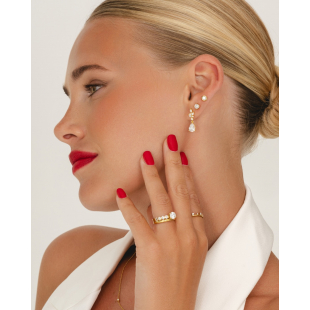
From the classic and elegant appeal of yellow gold, the versatile and durable qualities of platinum and the unique on-trend blush tone of rose gold, there are so many options when it comes to choosing your metal type. Similarly to choosing diamonds, personal preference is key as the type of metal chosen has a distinct correlation to the complete look and feel of the jewelry piece.
Here at Austen & Blake, we know an informed decision is usually the best kind. That's why we've created this guide to help you in your search.
Two important things to consider when purchasing a piece of gold jewelry are the carat and the color. Both will have an impact on the look and feel of your piece.
Carat is more commonly abbreviated to KT or K and is a measurement of the proportion of pure gold mixed with another metal alloy. This means that if the gold purity is high, then the value will be too. This does not change whether you are choosing between yellow, rose or white gold.
Carat is used to refer to metals and gemstones. When used in the context of diamonds, carat (ct) measures the weight of precious gems. You can read more in our diamond buying guide.
We offer jewelry in 9K, 14K and 18K, allowing you to personalize your metal carat to suit your requirements.
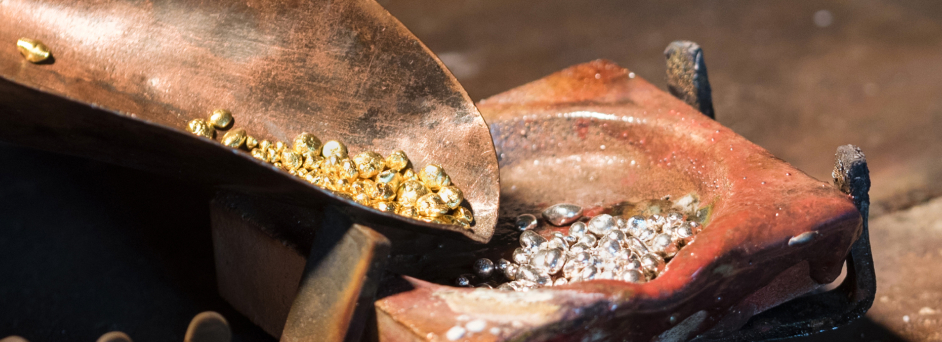
Yellow gold is considered a classic and traditional choice for jewelry.
If you wish to wear your jewelry every day, we'd recommend choosing a lower carat as the gold purity is lower, making it a more robust option. Higher value pieces may suit a high carat to help them feel heavier and more luxurious.

Yellow gold is created by combining pure gold with alloy metals such as zinc and copper. It is important to remember that the higher the carat, the more yellow the gold will appear.
This is a desirable characteristic of high-carat gold, but it is important to bear in mind that it will be softer and more prone to damage, including scratches and dents.
Incredibly elegant and contemporary, white gold is a great choice for those wishing to wear silver-toned fine jewelry. It also proves a wonderful setting for Colored gemstones due to the versatile tone of the metal.
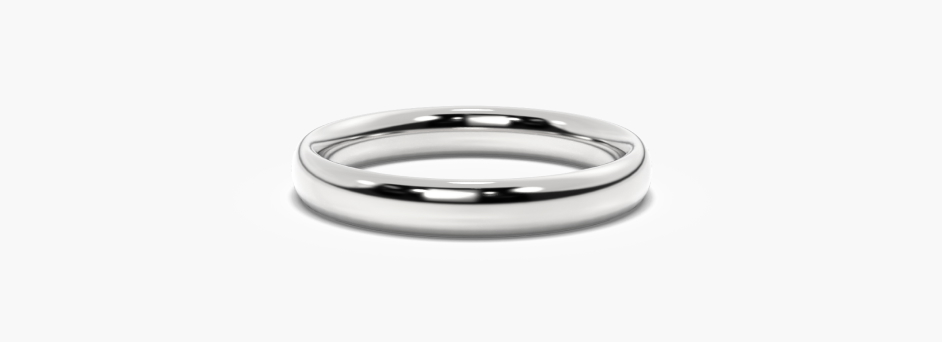
White gold is never completely white. It's an off-white or cream shade which is created by mixing pure gold with a white metal such as silver, magnesium or palladium.
Although white gold can be available in a variety of carats, 9K is most commonly used to ensure durable pieces are made and can be worn every day.
It is often plated with rhodium, which in time wears off, so regular re-plating is required to maintain its whiteness.
Fashionable and romantic, rose gold has been used to create jewelry since the 1920s. It has risen to popularity more recently due to its stunning and surprisingly versatile blush hue.
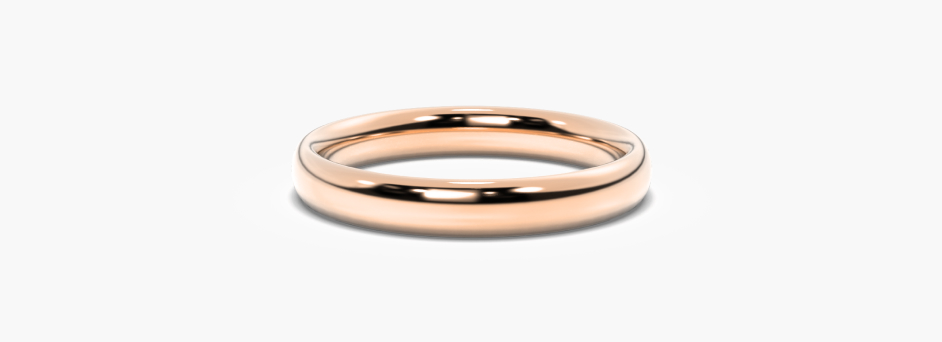
This unique gold color is created by mixing pure gold with copper alloy to form its signature blush tone. A higher carat will create a pinker tone, whereas rose gold created using more copper will have a redder appearance.
It is important to bear in mind that rose gold can affect people with copper allergies. If you have sensitive skin, it is a good idea to choose a higher carat.
Both durable and versatile, platinum is a great option for those looking for a hard-wearing metal with stylish simplicity. This precious metal is naturally white in color, making it a wonderful option for pairing with any type of gemstone.
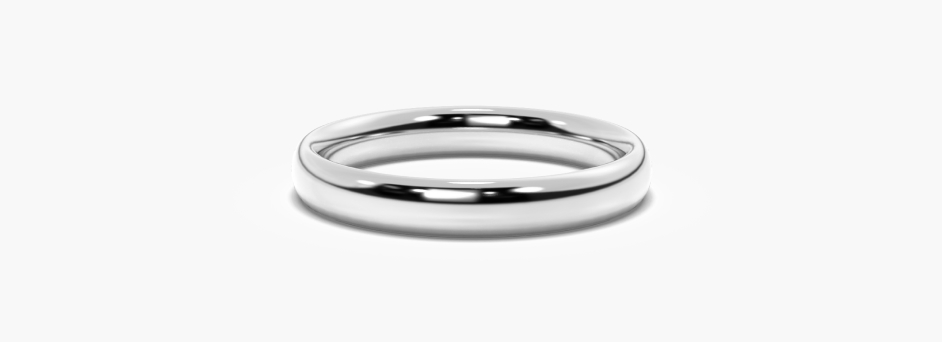
Platinum, unlike other metals, does not need to be mixed with a large amount of other substances. In most cases, it is available in an almost pure form, 95%.
Due to its near pure form, platinum is less prone to scratching and will retain its brilliance and color over time.
This also makes it the ideal choice for those with allergies or sensitive skin due to its hypoallergenic nature.
The most popular type of silver used in jewelry making is sterling silver.
This metal has a muted grayish color, which means both diamonds and colored gemstones look beautiful in this setting. It is generally more affordable than other precious metal options.
Over time, it will naturally oxides and darken as it reacts with sulfur in the air. It forms a patina that adds to the piece's character and story.
Sterling silver contains 92.5% pure silver. Since silver can be relatively soft, it is alloyed with other metals for greater strength and durability for wear.
It's also a great choice for those with a nickel allergy, as it only contains a minimal amount.
Still have questions? Our experts are here to assist you.
 Request an appointment
 Our stores